Every PTA has the same problem. You need attractions that pull a crowd, you have almost no budget to book them with, and if the weather turns you could easily end the day down rather than up. Here is what actually works, from the supplier side of the table.
The three ways a fair makes money
Everything on your field falls into one of three buckets, and the mistake most committees make is filling up with the first and forgetting the third.
1. Things people pay a small amount for, repeatedly
Tombola, splat-the-rat, hook-a-duck, target games. Low unit price, high repeat rate. This is where the bulk of the money comes from, because a family of four will spend £20 across a dozen £1 and £2 goes without ever feeling like they have spent anything.
2. Things people pay once for, at a higher price
Face painting, a bouncy castle wristband, a bigger attraction. Fewer transactions, larger each. Useful, but the ceiling is lower than people expect.
3. Things that lengthen the visit
Seating, a decent tea and cake stall, live music, somewhere for the adults to stand. These often make no money directly and are the single biggest lever on total takings, because everything in bucket one depends on people still being on your field at three o'clock.
Attractions that reliably earn their pitch
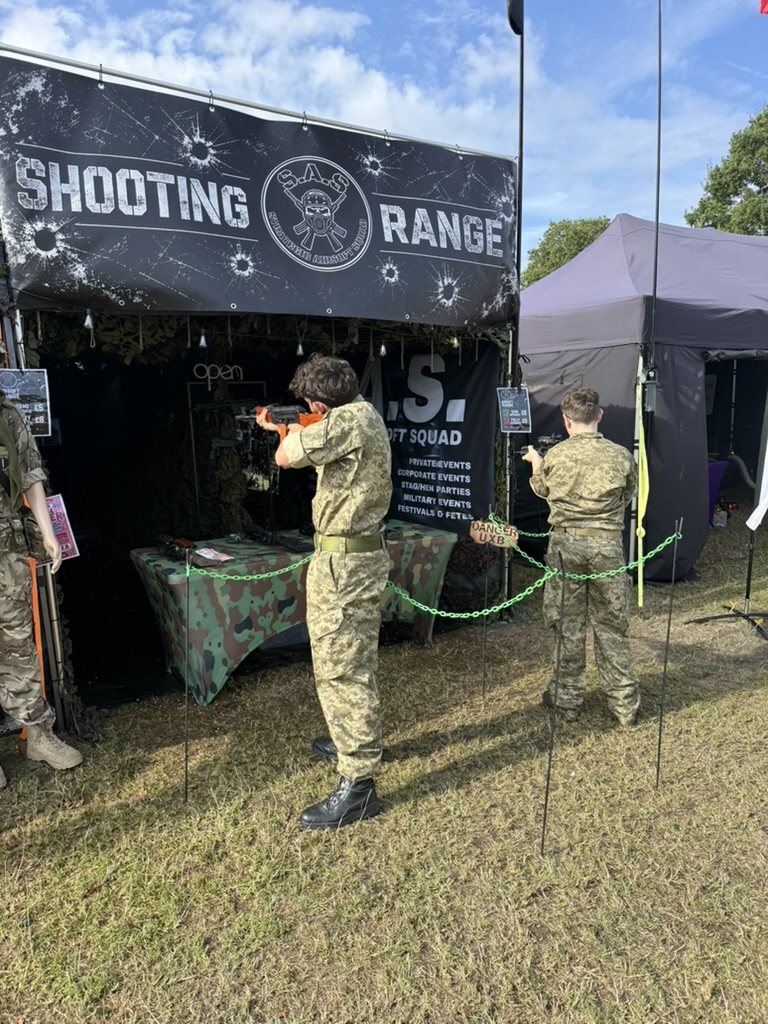
- Target games of any kind. Airsoft ranges, archery, coconut shy, nerf. Two-minute turns, a score, and the person who missed immediately wants another go.
- Anything with a leaderboard. Fastest time, highest score, most in thirty seconds. Write it on a whiteboard where people can see it.
- Soak the teacher. Unbeatable, if you can find a willing volunteer.
- A proper raffle with a few real prizes, sold from the moment the gates open rather than from a table nobody walks past.
What tends to disappoint: attractions with long cycle times, anything that only appeals to under-fives, and stalls that need a queue to be fun but can only serve one person a minute.
Pay-per-go versus paying a supplier
This is the decision that determines whether you make money or take a risk.
If you book a supplier for a flat fee, you have paid before a single person walks in. If it rains, that is your loss.
If a supplier works pay-per-go, visitors pay them directly and you charge a pitch fee. You bank the pitch fee regardless of weather, and the supplier carries the risk of a quiet day. For a school fair this is almost always the better structure.
We run either way. On school fairs we usually suggest pay-per-go — our rates are £5 for 20 shots, £10 for 50 — because it means the PTA cannot lose money on us.
Practical things that quietly cost you money
- Not taking cards. A card reader costs very little and materially increases takings, because nobody carries cash any more. Fit one to every stall, not just the main one.
- Bad signage at the gate. If people cannot see what is on offer, they take one lap and leave.
- Everything in one corner. Spread the draws to the far edges so people walk past the small stalls to reach them.
- Closing too early. The last hour is often the busiest.
The paperwork a supplier should hand you
Whoever you book, ask for their public liability certificate and a written risk assessment for your site, and ask before you commit rather than the week of the fair. A supplier who has these ready has done a lot of events. One who has to dig them out has not.
Ours is £2 million of public liability and a risk assessment written for your venue, both issued with the quote as standard.
Strategic Airsoft Squad brings a fully enclosed 9m × 3m airsoft range to your event. Events and parties start at £250, all-inclusive. Ages 6 and up, £2 million public liability, based in Hertfordshire and covering Surrey, Sussex, London and the Home Counties — nationwide for shows.
Get a quote or call 07916 168977.