
Airsoft is younger than most people assume, and it exists for a reason that has nothing to do with sport.
It started because of a ban
Japan has some of the strictest firearms laws in the world. Private ownership of real firearms is, for practical purposes, out of reach for ordinary citizens. In the 1970s, Japanese manufacturers began producing highly detailed spring-powered replicas that fired small plastic pellets — giving collectors and enthusiasts something they could legally own and shoot.
What began as scale-model collecting turned into a shooting hobby, and then into games. The engineering got better fast: gas systems arrived, then the electric gearbox designs that still define the sport today.
Coming west
Through the 1980s and 1990s the guns spread to Europe and North America, initially among collectors and military enthusiasts. Organised skirmish games followed — woodland sites, teams, objectives — and airsoft slowly separated itself from paintball as a distinct sport with a strong emphasis on realism and on an honour system for calling your own hits.
Airsoft in Britain
The UK now has a large and well-organised airsoft community with hundreds of sites, thriving retailers and a genuine domestic manufacturing and upgrade scene.
The legal framework here has shaped how it operates. Because the replicas are realistic, UK law restricts their sale and manufacture, with a specific carve-out for organised airsoft activity — which is why regular skirmishers register with a national database and why buying a realistic replica is not something you can do casually. Later legislation set the energy limits that define an airsoft gun in law.
The practical effect is that British airsoft is a fairly self-regulating, safety-conscious sport. It has had to be.
Where it goes next
The barrier to airsoft has always been the same: you have to get to a site, commit a day, and ideally know somebody who already plays. That keeps out an enormous number of people who would enjoy it.
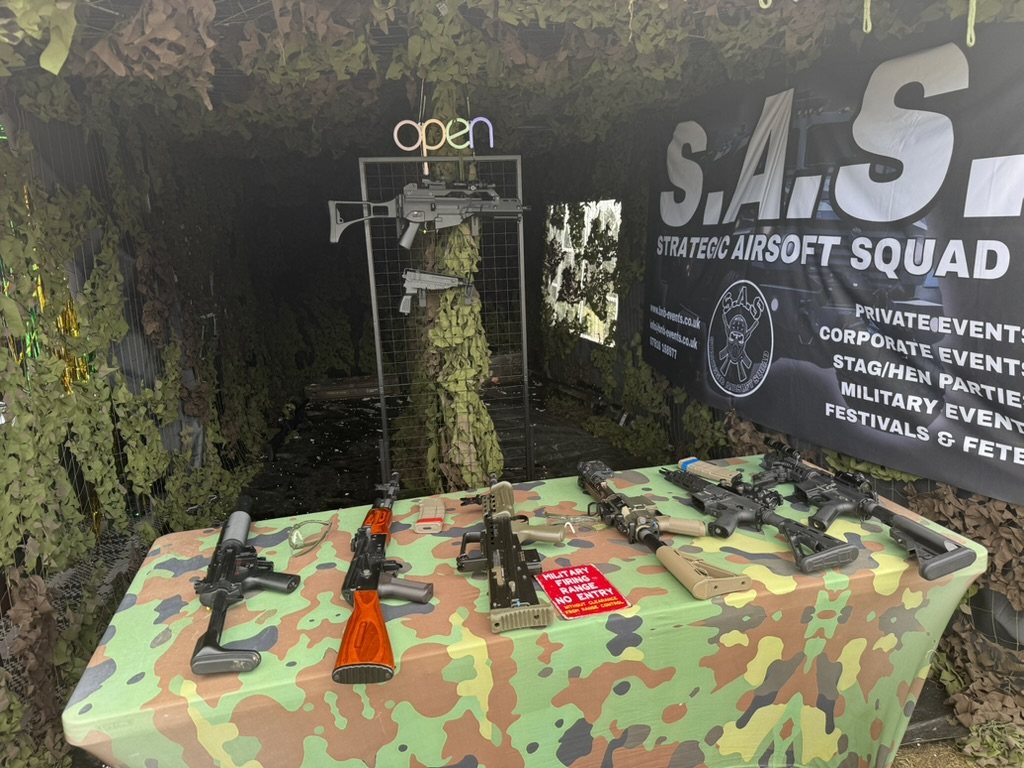
That is the gap mobile ranges fill. A fully enclosed lane that travels to a festival, a car park or a back garden lets somebody try the sport in two minutes with no kit and no commitment. Plenty of people who now play regularly started with exactly that — a go on a range at a county show, and a search for their nearest site on the way home.